Table of Contents
- Introduction
- Alcohol: An Ancient Molecule With a Modern Story
- The Ancient Relationship Between Humans and Alcohol
- Alcohol Metabolism: A Universal Survival Mechanism
- Why Alcohol Metabolism Exists in All Animals
- Fermentation: Humanity’s Earliest Food Technology
- Why Fermented Foods Were Essential for Human Survival
- Why Humans Enjoy Alcohol: A Neurobiological Perspective
- How the Body Handles Alcohol: From Absorption to Energy
- The Two‑Step Enzymatic Pathway of Ethanol Metabolism
- Ethanol as a High‑Energy Molecule
- Acetaldehyde: The Molecule Behind Intoxication and Tissue Damage
- Evolutionary Limits of Alcohol Metabolism
- Genetic Variation in Alcohol Metabolism: The Asian Flush
- Closing the Loop: From Alcohol to Energy Storage
- Take-Home Messages
- Summary and Conclusions
- Further Reading
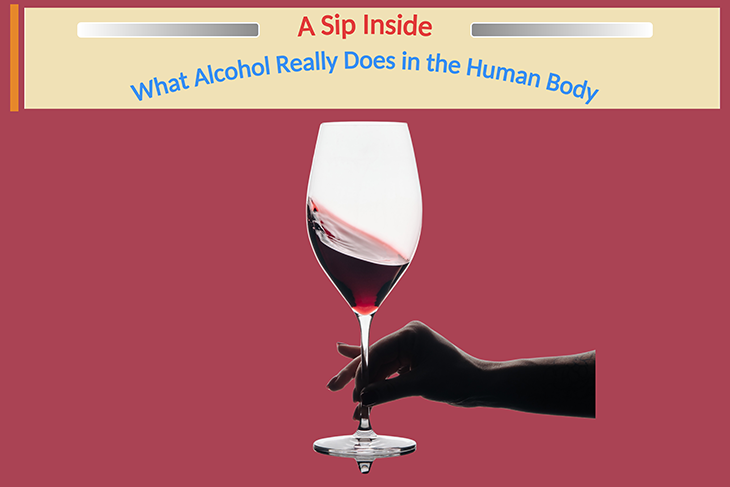
Figure 1. A Sip Inside: What Alcohol Really Does in the Human Body. Alcohol has been part of human life for thousands of years — woven into celebrations, rituals, meals, and moments of comfort — yet few people ever stop to ask what actually happens to alcohol once it enters the body. We know how it feels, but not how it works. Behind every sip lies a remarkable biological story: a tiny two‑carbon molecule that slips quickly into the bloodstream, travels to the liver, and is transformed through ancient metabolic pathways shared by all animals. These pathways evolved long before humans brewed wine or beer, and they explain why alcohol can energize, relax, intoxicate, or harm depending on dose, genetics, and context. Understanding how alcohol is absorbed, metabolized, and converted into energy — and why it sometimes overwhelms the system — gives us a clearer view of its effects on health, behavior, and long‑term wellbeing. This article invites readers of all backgrounds to explore that journey with clarity, curiosity, and scientific insight.
Introduction
Alcohol: An Ancient Molecule With a Modern Story
For as long as humans have gathered around fires, shared meals, and celebrated milestones, alcoholic beverages have been part of our collective experience. Archaeologists have uncovered Late Stone Age vessels—nearly 12,000 years old—bearing chemical traces of intentional fermentation. These early brews were more than simple indulgences; they were solutions to survival challenges in a world without refrigeration, clean water, or reliable food storage.
Fermentation transformed fragile foods into safer, longer‑lasting nourishment. Microorganisms consumed sugars and released ethanol, lactate, carbon dioxide, and a constellation of flavor‑shaping molecules, creating foods and drinks that resisted spoilage and carried fewer pathogens than untreated water. For much of recorded history, ale, wine, and fermented foods were not luxuries—they were lifelines, consumed daily by adults and children alike. Yet alcohol’s story is not only cultural. It is profoundly biological.
Long before humans brewed beverages, animals evolved enzymes to metabolize alcohols naturally present in fermented fruits, nectars, and decomposing plant matter. This means our ability to process alcohol is far older than our desire to drink it. Ethanol is a small, energy‑rich molecule—yielding ~7.1 kcal per gram—and organisms capable of extracting this energy gained a subtle evolutionary advantage.
But modern alcoholic beverages contain far higher concentrations of ethanol than anything our ancestors encountered in nature. And this mismatch between ancient biology and modern consumption shapes how alcohol behaves in the body—how it is absorbed, metabolized, converted into energy, stored as fat, and how it can sometimes overwhelm the very pathways designed to handle it.
Understanding alcohol, therefore, requires more than knowing its cultural role. It demands a clear view of its biochemistry, its metabolic fate, and its physiological consequences—from the pleasant warmth of a first sip to the metabolic emergencies that arise when intake exceeds the body’s evolutionary design (see Figure 1).
This article explores that journey: Where does alcohol go once we drink it? How does the body transform it? And why does its metabolism matter for health, energy balance, and disease?
The Ancient Relationship Between Humans and Alcohol
Alcoholic beverages have accompanied human culture for millennia. Archaeological evidence shows that Late Stone Age vessels—nearly 12,000 years old—contain chemical traces of intentional fermentation, revealing that early humans were already crafting drinks enriched with ethanol, the primary alcohol in modern beverages. Yet, from an evolutionary perspective, 12,000 years is a blink, far too short a period for humans to have developed entirely new metabolic pathways. This means that our ability to metabolize alcohol predates our deliberate production of alcoholic drinks [1-2].
Alcohol Metabolism: A Universal Survival Mechanism
Long before humans brewed wine or beer, all animals possessed enzymatic systems capable of metabolizing alcohols. This is because animals routinely encounter naturally fermented or partially decomposed foods, which contain small but biologically meaningful amounts of alcohol. The presence of these metabolic pathways across species—from insects to mammals—underscores their evolutionary importance.
Alcohol metabolism is not merely a detoxification strategy. It reflects a deeper biological truth: Alcohols are energy‑rich molecules. When an organism can efficiently extract this chemical energy, it gains a survival advantage, especially in environments where food sources vary in freshness or fermentation state.
Why Alcohol Metabolism Exists in All Animals
The evolutionary logic is twofold:
- Alcohol appears spontaneously in nature. Fruits, nectars, grains, and plant materials ferment readily when exposed to yeasts or bacteria. Animals that could not metabolize alcohol would suffer toxicity or impaired function.
- Alcohol provides substantial caloric value. Ethanol yields 7.1 kcal per gram, placing it between carbohydrates/proteins (≈4 kcal/g) and fats (≈9 kcal/g). This makes alcohol an excellent supplemental energy source, especially for animals relying on opportunistic feeding.
Modern studies also show that low-level endogenous ethanol production occurs in the gut microbiome of many species, including humans. This means alcohol metabolism is not only a response to dietary exposure but also a built‑in component of normal physiology.
Fermentation: Humanity’s Earliest Food Technology
Humans embraced fermented foods early in our history—not merely for pleasure, but for survival. Long before refrigeration or modern preservation methods existed, fermentation offered a reliable way to extend the shelf life of perishable foods. In fermentation, microorganisms metabolize nutrients in the food, producing compounds such as ethanol (in wine, beer, and bread) or lactate (in yogurt), along with a diverse array of minor metabolites that create the distinctive flavors of fermented products.
When we consume fermented foods, we ingest both the microorganisms themselves and the nutrients they have transformed or left behind. All of these molecules—residual sugars, organic acids, microbial biomass, and fermentation byproducts—become fuel for human metabolism.
Why Fermented Foods Were Essential for Human Survival
The microorganisms involved in fermentation are typically non‑pathogenic and often beneficial. They grow rapidly and release antimicrobial compounds—including organic acids, ethanol, carbon dioxide, and bacteriocins—that inhibit the growth of spoilage organisms and pathogens. This microbial competition is precisely why fermented foods last longer than their fresh counterparts.
For most of human history, this was not a convenience—it was a lifeline. Without refrigeration, canning, or pasteurization, fermentation was one of the few reliable methods to preserve food safely.
Even more striking: For centuries, fermented beverages were safer to drink than water. Untreated water frequently carried pathogens, while ale, wine, and other fermented liquids contained fewer microbes due to the antimicrobial effects of ethanol and acidity. As a result, daily consumption of alcoholic beverages was standard practice, even among children in urban centers.
Examples of this preservation advantage are still familiar today:
- Yogurt and cheese last far longer than fresh milk.
- Pickles remain edible long after cucumbers would spoil.
- Fermented grains resist contamination better than raw grains.
Fermentation was not just a culinary tradition—it was an evolutionary strategy for survival.
Why Humans Enjoy Alcohol: A Neurobiological Perspective
But why do humans enjoy alcohol enough to risk intoxication? The answer lies in the neurobiology of inhibition and reward.
Before drunkenness sets in, most people experience a phase of euphoria, relaxation, and reduced restraint. This is not merely psychological—it reflects a precise sequence of neural events.
Alcohol acts as a general neuronal depressant, enhancing inhibitory neurotransmission (primarily via GABA-A receptors) and reducing excitatory signaling (notably through NMDA glutamate receptors). However, not all neurons respond equally.
The first neurons to be suppressed are those involved in inhibitory circuits—the networks that make us cautious, shy, or restrained. When these neurons quiet down, the circuits responsible for boldness, sociability, and positive affect are temporarily released from constant inhibitory control. This creates the familiar sensation of “inner brakes lifting.”
But alcohol’s effects do not stop there. As blood alcohol concentration rises, even the reward and social circuits begin to shut down. Eventually, widespread neuronal suppression leads to loss of coordination, impaired judgment, and—at high levels—unconsciousness.
Modern studies add further nuance:
- Alcohol increases dopamine release in the mesolimbic reward pathway.
- It modulates endorphin signaling, contributing to feelings of warmth and pleasure.
- It alters cerebellar processing, affecting balance and motor control.
- It disrupts prefrontal cortex function, impairing decision‑making.
Thus, the human attraction to alcohol is deeply rooted in ancient metabolic pathways, microbial ecology, and neural circuitry—a convergence of biology and behavior shaped over millions of years.
How the Body Handles Alcohol: From Absorption to Energy
We now understand why humans have long enjoyed alcoholic beverages. The next step is to see how alcohol is metabolized once it enters the body. Ethanol, the primary alcohol in beverages, is a small, highly water‑soluble molecule. Because of this, it is absorbed rapidly throughout the digestive tract—beginning in the stomach and continuing through the small intestine—and appears in the bloodstream within minutes of ingestion. Like many nutrients, ethanol is metabolized primarily in the liver, although other tissues, including the stomach, pancreas, and even the brain, possess limited metabolic capacity (see Figure 2) [1-4].
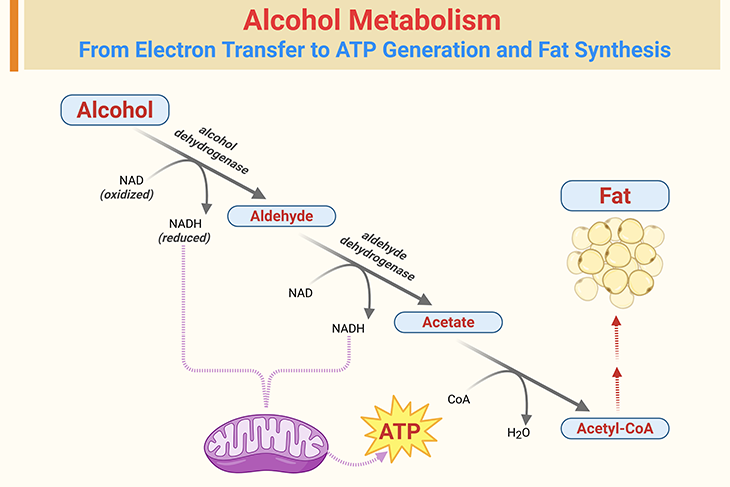
Figure 2. Alcohol Metabolism: From Electron Transfer to ATP Generation and Fat Synthesis. Alcohol is metabolized through a sequence of oxidative reactions catalyzed by hepatic dehydrogenases, which strip electrons from ethanol and transfer them to NAD⁺, forming NADH. The resulting NADH feeds electrons into the mitochondrial electron transport chain, driving ATP production. Concurrently, ethanol is converted to acetate, which is further transformed into acetyl‑CoA — a central metabolic intermediate that can enter lipid‑synthesis pathways and contribute to fatty acid formation.
The Two‑Step Enzymatic Pathway of Ethanol Metabolism
Inside the liver, ethanol is processed through a two‑enzyme system:
- Alcohol dehydrogenase (ADH)
- Acetaldehyde dehydrogenase (ALDH)
Both enzymes remove electrons from their substrates, transferring them to NAD⁺, the same electron carrier central to carbohydrate, lipid, and amino acid metabolism. These electrons ultimately reach the mitochondrial electron transport chain, contributing to ATP production.
The first reaction converts ethanol into acetaldehyde, a highly reactive and toxic intermediate. The second reaction rapidly converts acetaldehyde into acetate, which is then transformed into acetyl‑CoA—the universal two‑carbon energy currency of metabolism (see Figure 2) [1-3].
Ethanol as a High‑Energy Molecule
Once ethanol is converted to acetyl‑CoA, it becomes metabolically indistinguishable from the acetyl‑CoA derived from glucose, fatty acids, or amino acids. It enters the Krebs cycle, generating additional NADH and FADH₂, and ultimately producing ATP through oxidative phosphorylation.
Because ethanol is a compact two‑carbon molecule with dense chemical energy, it is highly caloric, yielding approximately 7.1 kcal per gram—nearly twice the caloric density of carbohydrates or proteins.
When cellular energy levels are high, acetyl‑CoA from ethanol is diverted toward fat synthesis, contributing to long‑term energy storage. This is why alcoholic beverages can be a hidden source of excess calories:
- A typical can of beer contains ~150 kcal (similar to two slices of toast).
- A standard glass of wine contains ~200 kcal (similar to a cup of cooked white rice).
Many individuals underestimate how much caloric load they consume through alcohol alone.
Acetaldehyde: The Molecule Behind Intoxication and Tissue Damage
While ethanol itself has psychoactive effects, many of the unpleasant symptoms of intoxication arise from acetaldehyde, the intermediate produced by ADH (see Figure 2).
Acetaldehyde is:
- Highly reactive, forming adducts with proteins and DNA
- Toxic, contributing to cellular injury
- Responsible for flushing, nausea, and headache
- A driver of long‑term tissue damage, including liver fibrosis and cirrhosis in chronic alcohol use
If acetaldehyde accumulates faster than ALDH can clear it, intoxication symptoms intensify.
Evolutionary Limits of Alcohol Metabolism
Although humans can metabolize alcohol, evolution only equipped us to handle low levels—the small amounts found in naturally fermented foods. Purposefully fermented beverages, containing much higher ethanol concentrations, emerged only in the last 12,000 years, far too recent for major evolutionary adaptation.
This mismatch explains why excessive alcohol ingestion can overwhelm metabolic pathways, leading to:
- Acute intoxication
- Vomiting and dehydration
- Loss of consciousness
- Metabolic emergencies, especially in fasting individuals
One critical danger is ethanol’s ability to inhibit gluconeogenesis, the liver’s production of glucose from amino acids. In people who have not eaten carbohydrates, this can cause dangerously low blood glucose, leading to confusion, seizures, or coma.
Genetic Variation in Alcohol Metabolism: The Asian Flush
The ability to metabolize alcohol varies widely across populations. A significant proportion of individuals of East Asian descent possess a less effective form of acetaldehyde dehydrogenase (ALDH2). This variant slows the conversion of acetaldehyde to acetate, causing acetaldehyde to accumulate rapidly.
As a result, even small amounts of alcohol can trigger:
- Facial flushing
- Palpitations
- Dizziness and cognitive changes
- Nausea
This condition, often called the Asian flush, reflects a biochemical bottleneck: normal production of acetaldehyde by ADH, but impaired clearance by ALDH2. Individuals may choose to avoid alcohol entirely or experience stronger symptoms at lower doses.
Closing the Loop: From Alcohol to Energy Storage
We have now traced how all major sources of calories—carbohydrates, lipids, proteins, and alcohol—are metabolized. Each can generate immediate energy or be converted into molecules stored for future use. Ethanol, despite its unique psychoactive properties, ultimately feeds into the same metabolic pathways as other nutrients.
This sets the stage for the next chapter in our series: What determines how much energy we store? And how does this balance between intake and expenditure shape the biology of obesity?
Take‑Home Messages
- Alcohol metabolism is ancient biology woven into all animals. Our enzymes for handling naturally fermented foods long predate the intentional brewing of alcoholic beverages.
- Fermentation was humanity’s earliest safeguard. Microbes transformed fragile foods into safer, longer‑lasting nourishment, making fermented products essential in eras without refrigeration or clean water.
- Ethanol enters the body swiftly and directly. Its small, soluble structure allows rapid absorption, with the liver orchestrating most of its metabolism through a precise two‑step enzymatic pathway.
- Alcohol becomes acetyl‑CoA — the universal metabolic crossroads. This places ethanol alongside carbohydrates, fats, and proteins as a high‑calorie nutrient capable of fueling energy production or contributing to fat storage.
- Acetaldehyde is the true disruptor. This reactive intermediate explains both the immediate sensations of intoxication and the long‑term tissue injury associated with chronic alcohol use.
- Our evolutionary design anticipates low alcohol exposure, not modern concentrations. Purposefully fermented beverages exceed the metabolic capacity we originally evolved to handle.
- Alcohol can destabilize metabolic balance. Excess intake, especially during fasting, can suppress gluconeogenesis and precipitate dangerous hypoglycemia, turning drinking into a medical emergency.
- Genetic diversity shapes alcohol tolerance. Variants in ALDH2, common in East Asian populations, cause acetaldehyde accumulation and pronounced symptoms even at low doses.
- All calorie sources converge on shared metabolic pathways. Whether from food or drink, nutrients ultimately become energy or storage molecules — a principle that naturally leads into the biology of energy balance and obesity.
Summary and Conclusions
Alcohol: An Ancient Molecule Intertwined With Human Biology
Alcohol has accompanied human civilization since its earliest chapters, long before written language or agriculture matured. Fermentation offered not only flavor and celebration, but survival, transforming fragile foods into safer, longer‑lasting nourishment. Yet the biological story of alcohol reaches deeper: animals evolved the ability to metabolize naturally occurring alcohols millions of years before humans ever brewed beverages. This evolutionary inheritance explains why ethanol fits so readily into our metabolic machinery.
Once ingested, ethanol’s journey is swift. Its small, soluble structure allows rapid absorption throughout the digestive tract, delivering it into the bloodstream within minutes. The liver then orchestrates its transformation through a two‑enzyme pathway—alcohol dehydrogenase (ADH) and acetaldehyde dehydrogenase (ALDH)—each transferring electrons to NAD⁺, feeding the mitochondrial electron transport chain and generating ATP. Ethanol ultimately becomes acetyl‑CoA, the universal metabolic crossroads shared by carbohydrates, fats, and proteins. This makes alcohol a high‑calorie nutrient, capable of fueling energy production or contributing to fat storage when intake exceeds metabolic need.
Yet alcohol’s metabolism carries risks. Acetaldehyde, the intermediate produced by ADH, is highly reactive and toxic. Its accumulation explains the immediate sensations of intoxication—flushing, nausea, cognitive changes—and contributes to long‑term tissue injury, including liver fibrosis and cirrhosis. Genetic variation, particularly the ALDH2 deficiency common in East Asian populations, magnifies these effects, causing pronounced symptoms even at low alcohol doses.
Evolution prepared us for low levels of naturally fermented alcohol, not the concentrated beverages humans began producing only 12,000 years ago. When intake exceeds metabolic capacity, ethanol can suppress gluconeogenesis, precipitating dangerous hypoglycemia—especially in fasting individuals. Thus, alcohol’s dual nature as both nutrient and toxin reflects a delicate balance between ancient biology and modern consumption.
Gaps in Knowledge
Despite decades of research, several important questions remain:
- Individual variability in alcohol metabolism is incompletely understood. Beyond ALDH2 variants, emerging studies suggest roles for gut microbiome composition, hepatic mitochondrial density, and epigenetic regulation of ADH/ALDH expression.
- Long‑term effects of low‑dose chronic alcohol exposure remain debated. While some epidemiological studies suggest cardiometabolic benefits, mechanistic clarity is lacking, and confounding lifestyle factors remain difficult to isolate.
- Interactions between alcohol metabolism and circadian biology are only beginning to be explored. Early evidence suggests that time‑of‑day influences ethanol clearance, hepatic redox balance, and acetyl‑CoA flux.
- Sex‑specific differences in alcohol pharmacokinetics—driven by body composition, gastric ADH activity, and hormonal regulation—require deeper mechanistic study.
- The role of acetaldehyde adducts in neurodegeneration, carcinogenesis, and immune modulation remains an active frontier.
Future Directions
The next decade promises transformative insights:
- Precision metabolism: Genetic profiling of ADH, ALDH2, and related pathways may enable personalized guidance on alcohol tolerance, risk, and safe consumption thresholds.
- Microbiome‑based interventions: Modulating gut microbial fermentation and endogenous ethanol production may offer new strategies for metabolic health and liver disease prevention.
- Redox‑state therapeutics: Because ethanol metabolism profoundly alters NAD⁺/NADH balance, emerging NAD⁺‑boosting therapies may mitigate alcohol‑related metabolic stress.
- Metabolic modeling: Advanced computational models may clarify how ethanol‑derived acetyl‑CoA contributes to lipogenesis, obesity, and non‑alcoholic fatty liver disease.
- Public health insights: Understanding how alcohol interacts with modern dietary patterns, sedentary lifestyles, and metabolic disorders will be essential for shaping future guidelines.
Closing Reflection
Alcohol’s story is both ancient and modern—woven through culture, chemistry, and evolution. Its metabolism reveals how deeply interconnected our biology is with the foods and drinks we create. Ethanol can nourish, intoxicate, heal, harm, energize, or destabilize, depending on dose, genetics, physiology, and context. By understanding its metabolic fate, we gain not only scientific clarity but also a deeper appreciation for how the body balances energy, risk, and resilience.
This sets the stage for the next chapter: How do these metabolic pathways determine what we store, and how does this balance shape the biology of obesity?
MitoSwab™
Authoritative Mitochondrial Assessment
MitoSwab™ delivers a non-invasive, clinically validated analysis of mitochondrial function. Using a simple buccal swab, it precisely quantifies Electron Transport Chain components and Citrate Synthase activity—a definitive marker of mitochondrial content.
Clinical Correlation: 84% agreement with the gold-standard muscle biopsy.
For the initial investigation of mitochondrial dysfunction, MitoSwab™ is the proven, practical alternative to invasive procedures.
Choose the standard of simplicity. Choose MitoSwab™.
Further Reading
- Goldman MR, Molina-Castro M, Etkins JC, Koide TL, Ramchandani VA, Plawecki MH, Mennella JA, Pepino MY. Recent advances in alcohol metabolism: from the gut to the brain. Physiol Rev. 2025 Oct 1;105(4):2501-2535. doi: 10.1152/physrev.00053.2024. Epub 2025 Jul 10. PMID: 40637545; PMCID: PMC12345593.
https://pubmed.ncbi.nlm.nih.gov/40637545/
https://pmc.ncbi.nlm.nih.gov/articles/PMC12345593/pdf/nihms-2097514.pdf
(A comprehensive, high‑impact review covering evolutionary origins, hepatic and brain metabolism, ALDH2 variability, endogenous ethanol production, and clinical implications.) - Pechkovsky E, Kershengoltz B, Vlassov VV, Vlassov V and Turchinovich A (2026) Alcohol consumption: from biochemistry to behavior, health, and beyond. Front. Toxicol. 8:1876876. doi: 10.3389/ftox.2026.1876876
https://www.frontiersin.org/journals/toxicology/articles/10.3389/ftox.2026.1876876/full
(Integrates biochemical, clinical, and epidemiological evidence; discusses oxidative stress, neurochemistry, metabolic liver disease, and emerging therapies for alcohol use disorder.) - Zakhari S. Overview: how is alcohol metabolized by the body? Alcohol Res Health. 2006;29(4):245-54. PMID: 17718403; PMCID: PMC6527027.
https://pubmed.ncbi.nlm.nih.gov/17718403/
https://pmc.ncbi.nlm.nih.gov/articles/PMC6527027/pdf/245-255.pdf
(A clear primer describing how the body absorbs and oxidizes alcohol through major enzymatic pathways that shape its physiological effects.) - Deitrich R, Zimatkin S, Pronko S. Oxidation of ethanol in the brain and its consequences. Alcohol Res Health. 2006;29(4):266-73. PMID: 17718405; PMCID: PMC6527035.
https://pubmed.ncbi.nlm.nih.gov/17718405/
https://pmc.ncbi.nlm.nih.gov/articles/PMC6527035/pdf/266-273.pdf
(A concise review showing that the brain itself oxidizes ethanol, generating acetaldehyde that influences behavior and neurotoxicity.)