Table of Contents
- Introduction
- The Final Step in Understanding Life’s Smallest Power Plant
- The Molecular Motor at the Heart of Life
- A Universal Structure Across All Life
- The Protein That Spins Like a Turbine
- A Motor at the Nanoscale
- The Scientists Who Revealed the Motor Within
- Revealing the Structure Behind the Motion
- A Legacy Still in Motion
- The Daily Workload of Our Cellular Batteries
- The Astonishing Quantity of ATP We Produce
- Beyond Carbohydrates: The Energy of Fats
- Take-Home Messages
- Summary and Conclusions
- Knowledge Gaps and Missing Scientific Facts
- Future Directions
- Closing Reflection
- Further Reading
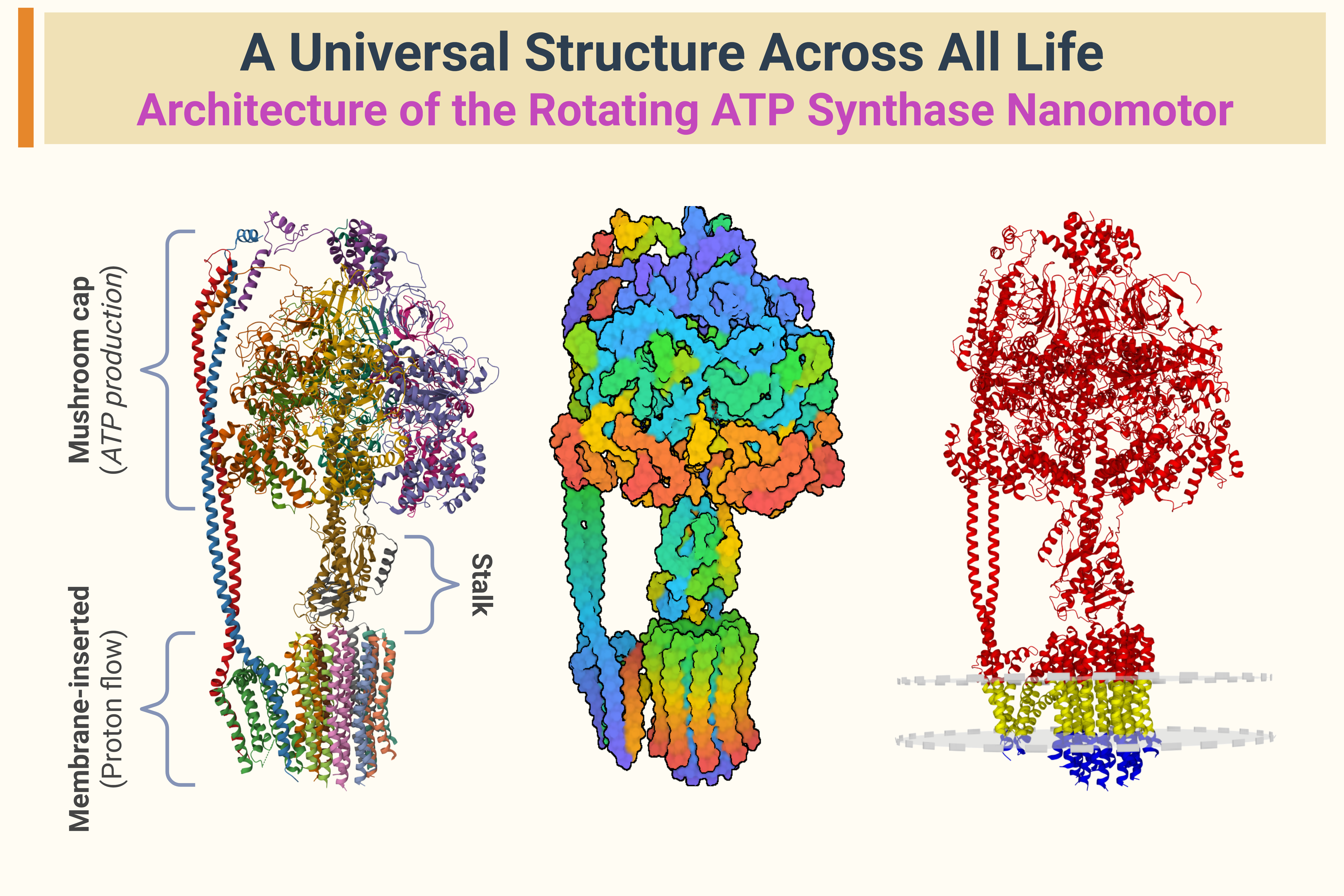
Figure 1. Architecture of the Rotating ATP Synthase Nanomotor. This figure depicts the molecular structure of ATP synthase. The lower portion of the enzyme, embedded within the inner mitochondrial membrane, forms the channel through which protons enter the matrix. The upper, mushroom-shaped region resides inside the mitochondrion and contains the catalytic sites where ATP is generated. The membrane-bound base and the central stalk rotate together during ATP synthesis. Structure prepared from Protein Data Bank entry 5T4O (E.coli).
[Adapted and modified from: https://www.rcsb.org/structure/5T4O]
Introduction
The Final Step in Understanding Life’s Smallest Power Plant
Across this series, we have followed a remarkable journey: from the quiet movement of electrons, to the birth of the chemiosmotic gradient, to the discovery of the rotating molecular motor that converts electrical force into chemical energy. We have seen mitochondria not as abstract organelles, but as living batteries, engineered by evolution to power every heartbeat, every thought, every breath.
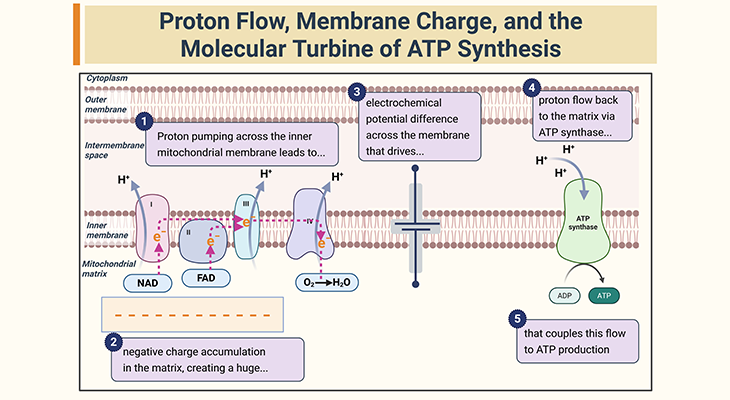
In this final chapter, we bring the story full circle. We now understand that mitochondria generate energy by capturing electrons from nutrients through NAD and FAD, passing them down a chain of reactions that ultimately combine with the oxygen we breathe to form water. This elegant sequence creates a powerful electrical gradient — negative inside, positive outside — that drives protons toward the mitochondrial core.
And at the center of this gradient sits one of biology’s most extraordinary creations: ATP synthase, a rotating nanoscale motor conserved across all life on Earth. As protons rush through its stalk, the enzyme spins at nearly 130 revolutions per second, transforming electrical energy into the chemical bonds of ATP, the molecule that fuels nearly every process in the human body [1-2].
The scale of this achievement is staggering. Each day, your cells regenerate roughly your entire body weight in ATP, recycling each molecule hundreds to thousands of times to sustain life. This relentless turnover underscores ATP’s central role in everything from muscle contraction to neuronal signaling, from protein synthesis to metabolic homeostasis.
Yet carbohydrates are only part of the story. In this concluding article, we prepare to transition toward the next frontier — how lipids, the most energy-dense molecules we consume, are broken down to produce even larger quantities of ATP. Understanding mitochondrial energy production is not merely an academic exercise; it is the foundation for grasping how food becomes movement, thought, warmth, and life itself.
This final installment brings together the discoveries of Boyer, Walker, Mitchell, and countless others, revealing how a tiny organelle — smaller than a grain of dust — orchestrates the grand symphony of human metabolism.
Our exploration of the mitochondrial battery ends here, but the story of how the body transforms food into energy continues.
The Molecular Motor at the Heart of Life
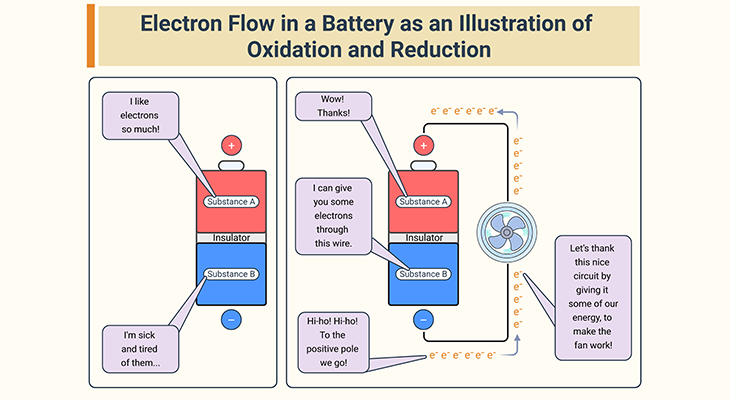
We now understand that mitochondria function as true cellular batteries, maintaining a positive and negative side across their inner membrane to power the formation of ATP, the universal chemical currency of life. Yet our journey into mitochondrial bioenergetics remains incomplete until we encounter the extraordinary protein that captures this electrical gradient and converts it into chemical energy. That protein is ATP synthase — arguably one of the most beautiful and elegant molecular machines in Biology.
A Universal Structure Across All Life
The figure below shows the iconic mushroom-shaped architecture of ATP synthase, magnified from a single molecule of E. coli. Its origin hardly matters, because ATP synthase is astonishingly conserved across all living organisms — bacteria, plants, animals, and humans. This universality strongly suggests that ATP synthase was already present in the Last Universal Common Ancestor (LUCA), more than 3.5 billion years ago, making it one of the most ancient and indispensable molecules on Earth. Every one of us carries millions of these motors in our mitochondria, tirelessly generating the energy that sustains life.
The Protein That Spins Like a Turbine
What makes ATP synthase so mesmerizing is not only its function, but its motion. The enzyme literally rotates, turning continuously at approximately 130 revolutions per second. The lower portion of the protein — embedded within the inner mitochondrial membrane — forms a proton channel. As protons flow through this channel, driven by the electrical gradient, they force the central stalk to spin like the axle of a microscopic turbine. This rotation induces conformational changes in the upper “mushroom cap,” enabling it to synthesize ATP with remarkable efficiency (see Figure 1).
Modern cryo-electron microscopy has revealed that this rotational mechanism is exquisitely coordinated: each 120-degree step of rotation corresponds to the formation of one ATP molecule. In humans, this process generates roughly 50–75 kg of ATP per day, recycled continuously to meet cellular demands (see Figure 2).
A Motor at the Nanoscale
ATP synthase is a nanomachine in the truest sense. It stands about 45 nanometers tall and 20 nanometers wide — so small that nearly 50,000 molecules placed side-by-side would span only one millimeter. Despite its tiny size, it operates with mechanical precision comparable to engineered turbines, converting electrical energy into chemical bonds with near-perfect efficiency.
This remarkable property has inspired scientists and engineers to explore ATP synthase as a model for designing synthetic nanomotors, bio-hybrid devices, and energy-harvesting nanotechnology. Its ability to convert electrochemical gradients into mechanical rotation represents one of nature’s most elegant solutions to energy conversion.
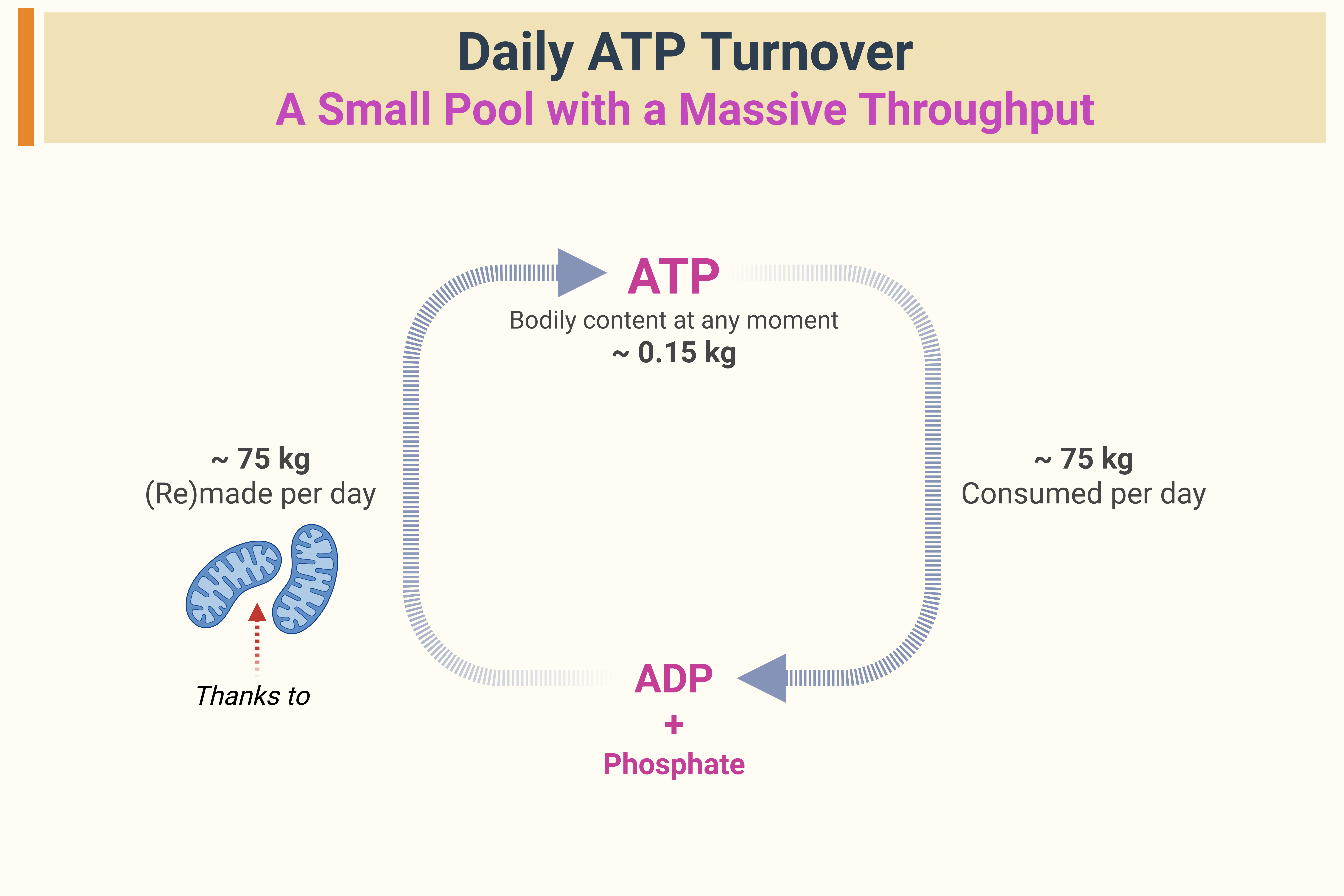
Figure 2. Daily ATP Turnover: A Small Pool with a Massive Throughput. This figure illustrates the daily dynamics of ATP production and use. Although the total amount of ATP required to sustain life each day is enormous, the actual ATP pool present in the body at any moment is small and rapidly cycled. Continuous, high-speed recycling of ATP is made possible only through the exceptional efficiency and relentless activity of mitochondria.
The Scientists Who Revealed the Motor Within
The remarkable mechanism of ATP synthase was uncovered through the complementary brilliance of Paul D. Boyer and John E. Walker, whose combined discoveries earned them the 1997 Nobel Prize in Chemistry. Dr. Boyer began studying ATP synthase in the 1950s, long before structural biology had the tools to visualize such a complex enzyme. Through meticulous biochemical analysis, he deduced not only how ATP was formed — a mechanism now known as the binding-change model — but also proposed the astonishing idea that the enzyme contained three distinct catalytic sites that changed their properties in a cyclical, rotating sequence [3-4].
Even without a three-dimensional structure, Boyer recognized that ATP synthase must behave like a rotary machine, with different parts shifting position as the enzyme progressed through its catalytic cycle. His insight was so bold that he famously described ATP synthase as a “molecular machine”, decades before the term became common in biology. Boyer lived to see his predictions confirmed by structural studies, and he passed away in 2018, just two months before his 100th birthday, having elucidated the workings of ATP synthase and more than 20 other enzymes during his extraordinary career.
Revealing the Structure Behind the Motion
Dr. John E. Walker entered the field in the 1980s, bringing with him the emerging power of structural biology. Determining the structure of ATP synthase was a formidable challenge: the enzyme is unusually large, composed of multiple subunits, and embedded partly within the mitochondrial membrane — a feature that complicates crystallization and imaging. Yet Walker succeeded in resolving its atomic architecture, revealing the mushroom-shaped complex with its central rotating stalk nestled inside the catalytic “cap” (see Figure 1) [4; 6].
The structure made Boyer’s predictions immediately and visually obvious. The central rotor physically shifts its position within the catalytic domains as it turns, explaining how the enzyme cycles through its three conformational states — open, loose, and tight — to generate ATP. Walker’s structural work provided the atomic-level evidence that ATP synthase truly operates as a rotary nanomotor, driven by the proton gradient across the inner mitochondrial membrane.
A Legacy Still in Motion
More than 20 years after receiving the Nobel Prize, Dr. Walker remains an active scientist and serves as the emeritus director of the Mitochondrial Biology Unit in Cambridge. His laboratory continues to investigate the structural and mechanistic details of ATP-producing systems, expanding our understanding of how cells manage energy at the molecular scale.
In a delightful nod to the beauty of the molecule, the research unit displays a massive three-dimensional LEGO model of ATP synthase — scaled up by a factor of 50 million — allowing visitors to appreciate the architecture of this molecular motor in a tangible, playful way. It is a fitting tribute to a protein whose elegance has captivated scientists for generations.
The Daily Workload of Our Cellular Batteries
We now have a complete picture of what mitochondria do: they energize our cells, functioning as intracellular batteries that convert the chemical potential of food into the usable energy of ATP. They accomplish this by harvesting electrons carried by NAD and FAD, molecules that collect reducing power from carbohydrates and other nutrients. These electrons are transferred through the mitochondrial electron-transport chain and ultimately react with the oxygen we breathe, producing water — a reaction so fundamental that humans generate roughly 250–300 mL of metabolic water per day simply through mitochondrial respiration.
As these redox reactions unfold, mitochondria establish a powerful electrical gradient across their inner membrane — negative inside, positive outside. This gradient is the essence of the mitochondrial battery. It drives protons toward the interior of the organelle, and ATP synthase, the rotating molecular motor we explored earlier, captures this flow. Protons, attracted by the negative charge of the matrix, enter through the enzyme’s stalk, generating the mechanical rotation that powers the chemical reaction forming ATP [5].
The Astonishing Quantity of ATP We Produce
How much ATP do these tiny motors produce? Approximately your entire body weight — every single day. This extraordinary number is only possible because ATP molecules are continuously recycled. Each ATP is broken down to ADP + phosphate, then re-synthesized again and again, often hundreds to thousands of times per day depending on the tissue. The total amount produced over 24 hours adds up to your weight, but these molecules never accumulate; they are constantly used and remade in a rapid, dynamic cycle (see Figure 2).
This staggering turnover illustrates how essential ATP is for every process that keeps us alive — muscle contraction, nerve signaling, protein synthesis, ion transport, detoxification, and even the maintenance of body temperature. In high-demand tissues such as the brain and heart, ATP turnover is so intense that a single molecule may be recycled more than 1,000 times per day [1-2].
Beyond Carbohydrates: The Energy of Fats
Although carbohydrates provide a major source of ATP, they are far from the only contributors. Lipids (fats) are metabolized through β-oxidation, generating enormous quantities of NADH and FADH₂. Gram for gram, fats yield more than twice the ATP produced by carbohydrates. In upcoming articles, we will explore how fatty acids enter mitochondria, how they are broken down, and why lipid metabolism is central to long-term energy storage, endurance, and metabolic health.
Take-Home Messages
- Mitochondria are true cellular batteries, converting the energy in food into an electrical gradient that powers nearly every biological function.
- ATP synthase is a rotating molecular motor, a nanoscale turbine that transforms electrical energy into chemical bonds — a universal mechanism conserved from bacteria to humans.
- We regenerate roughly our own body weight in ATP every day, not by storing it, but by recycling each molecule hundreds to thousands of times to sustain life.
- Electron carriers like NAD and FAD are central couriers of energy, delivering reducing power from carbohydrates, fats, and other nutrients to the mitochondrial machinery.
- The proton gradient is the heart of mitochondrial energy conversion, and its controlled dissipation through ATP synthase is what keeps cells alive.
- Fats produce even larger quantities of ATP than carbohydrates, revealing why lipid metabolism is essential for long-term energy balance and metabolic resilience.
- The discoveries of Boyer and Walker transformed biology, showing that life depends on exquisitely engineered molecular machines operating with atomic precision.
Summary and Conclusions
Mitochondria stand as one of biology’s most extraordinary inventions — intracellular batteries that convert the chemical potential of food into the usable energy of ATP, the molecule that powers nearly every function of life. In this final article of our series, we traced the complete arc of mitochondrial energy production: from the harvesting of electrons by NAD and FAD, to their reaction with oxygen to form water, to the creation of a powerful electrical gradient across the inner membrane. This gradient, negative inside and positive outside, is the driving force behind ATP synthesis.
At the center of this process lies ATP synthase, a rotating nanoscale motor conserved across all forms of life. As protons flow through its stalk, the enzyme spins at nearly 130 revolutions per second, converting electrical energy into chemical bonds with remarkable efficiency. This rotary mechanism, predicted by Paul D. Boyer and revealed structurally by John E. Walker, remains one of the most elegant examples of molecular engineering in nature. Their discoveries showed that ATP synthase operates through coordinated conformational changes — the binding-change mechanism — and that its rotation is physically encoded in its atomic architecture.
The scale of ATP production is staggering: humans regenerate roughly their entire body weight in ATP every day, recycling each molecule hundreds to thousands of times. This relentless turnover underscores ATP’s central role in sustaining muscle contraction, neuronal signaling, protein synthesis, ion transport, and metabolic homeostasis. Although carbohydrates supply a major portion of this energy, lipids produce even greater quantities of ATP, a topic that will guide our transition into the next series on how food is metabolized.
Knowledge Gaps and Missing Scientific Facts
Despite decades of discovery, several important questions remain:
- How proton flow is precisely regulated within the inner membrane, especially under varying metabolic states, is still not fully understood.
- The dynamic organization of ATP synthase dimers — which shape the curvature of mitochondrial cristae — remains an active area of investigation.
- The real-time kinetics of ATP recycling in different tissues (e.g., neurons vs. cardiomyocytes) are still being refined with new imaging technologies.
- The interplay between ATP synthase and mitochondrial supercomplexes is only beginning to be explored, with implications for efficiency and disease.
- How mitochondrial structure adapts to chronic metabolic stress — obesity, diabetes, aging — remains incompletely mapped.
These gaps highlight how much more there is to learn about the machinery that powers life.
Future Directions
The next frontier lies in understanding how mitochondria integrate energy production with whole-body metabolism:
- Lipid metabolism and β-oxidation will reveal how fats generate massive quantities of ATP and why they serve as long-term energy reservoirs.
- Advances in cryo-electron microscopy and single-molecule imaging will continue to refine our understanding of ATP synthase dynamics.
- Research into mitochondrial dysfunction may uncover new therapeutic targets for neurodegenerative diseases, metabolic disorders, and aging.
- Synthetic biology may one day harness ATP synthase as a model for designing bio-inspired nanomotors and energy-harvesting devices.
Closing Reflection
This final chapter completes our exploration of mitochondria as the batteries of our cells — ancient, elegant, and indispensable. Their ability to convert food into movement, thought, warmth, and life itself is a triumph of biological engineering. As we move forward into the next series, “Where Does All That Food Go?”, we carry with us a deeper appreciation for the molecular machines that make human metabolism possible.
MitoSwab™
Authoritative Mitochondrial Assessment
MitoSwab™ delivers a non-invasive, clinically validated analysis of mitochondrial function. Using a simple buccal swab, it precisely quantifies Electron Transport Chain components and Citrate Synthase activity—a definitive marker of mitochondrial content.
Clinical Correlation: 84% agreement with the gold-standard muscle biopsy.
For the initial investigation of mitochondrial dysfunction, MitoSwab™ is the proven, practical alternative to invasive procedures.
Choose the standard of simplicity. Choose MitoSwab™.

Further Reading
- Althaher AR, Alwahsh M. An overview of ATP synthase, inhibitors, and their toxicity. Heliyon. 2023 Nov 20;9(11):e22459. doi: 10.1016/j.heliyon.2023.e22459. PMID: 38106656; PMCID: PMC10722325.
https://pubmed.ncbi.nlm.nih.gov/38106656/
https://www.cell.com/action/showPdf?pii=S2405-8440%2823%2909667-6
(A comprehensive and recent review covering ATP synthase structure, function, and pharmacological relevance.) - Jonckheere AI, Smeitink JA, Rodenburg RJ. Mitochondrial ATP synthase: architecture, function and pathology. J Inherit Metab Dis. 2012 Mar;35(2):211-25. doi: 10.1007/s10545-011-9382-9. Epub 2011 Aug 27. PMID: 21874297; PMCID: PMC3278611.
https://pubmed.ncbi.nlm.nih.gov/21874297/
https://onlinelibrary.wiley.com/doi/epdf/10.1007/s10545-011-9382-9
(A high impact review detailing ATP synthase structure, disease relevance, and mitochondrial pathology.) - Leslie AG, Abrahams JP, Braig K, Lutter R, Menz RI, Orriss GL, van Raaij MJ, Walker JE. The structure of bovine mitochondrial F1-ATPase: an example of rotary catalysis. Biochem Soc Trans. 1999 Feb;27(2):37-42. doi: 10.1042/bst0270037. PMID: 10093703.
https://pubmed.ncbi.nlm.nih.gov/10093703/
(A foundational article by Nobel Laureate John E. Walker, offering deep mechanistic insight into ATP synthase rotation and catalytic function.) - Boyer PD. The binding change mechanism for ATP synthase–some probabilities and possibilities. Biochim Biophys Acta. 1993 Jan 8;1140(3):215-50. doi: 10.1016/0005-2728(93)90063-l. PMID: 8417777.
https://pubmed.ncbi.nlm.nih.gov/8417777/
(A seminal conceptual paper by Nobel Laureate Paul D. Boyer, explaining the mechanistic basis of ATP synthesis.) - Mitchell P. Coupling of phosphorylation to electron and hydrogen transfer by a chemi-osmotic type of mechanism. Nature. 1961 Jul 8;191:144-8. doi: 10.1038/191144a0. PMID: 13771349.
https://pubmed.ncbi.nlm.nih.gov/13771349/
(The landmark paper introducing the chemiosmotic hypothesis — the conceptual foundation of mitochondrial energy conversion.) - Abrahams JP, Leslie AG, Lutter R, Walker JE. Structure at 2.8 A resolution of F1-ATPase from bovine heart mitochondria. Nature. 1994 Aug 25;370(6491):621-8. doi: 10.1038/370621a0. PMID: 8065448.
https://pubmed.ncbi.nlm.nih.gov/8065448/
(A high-impact structural biology paper revealing the atomic architecture of the catalytic domain of ATP synthase.)